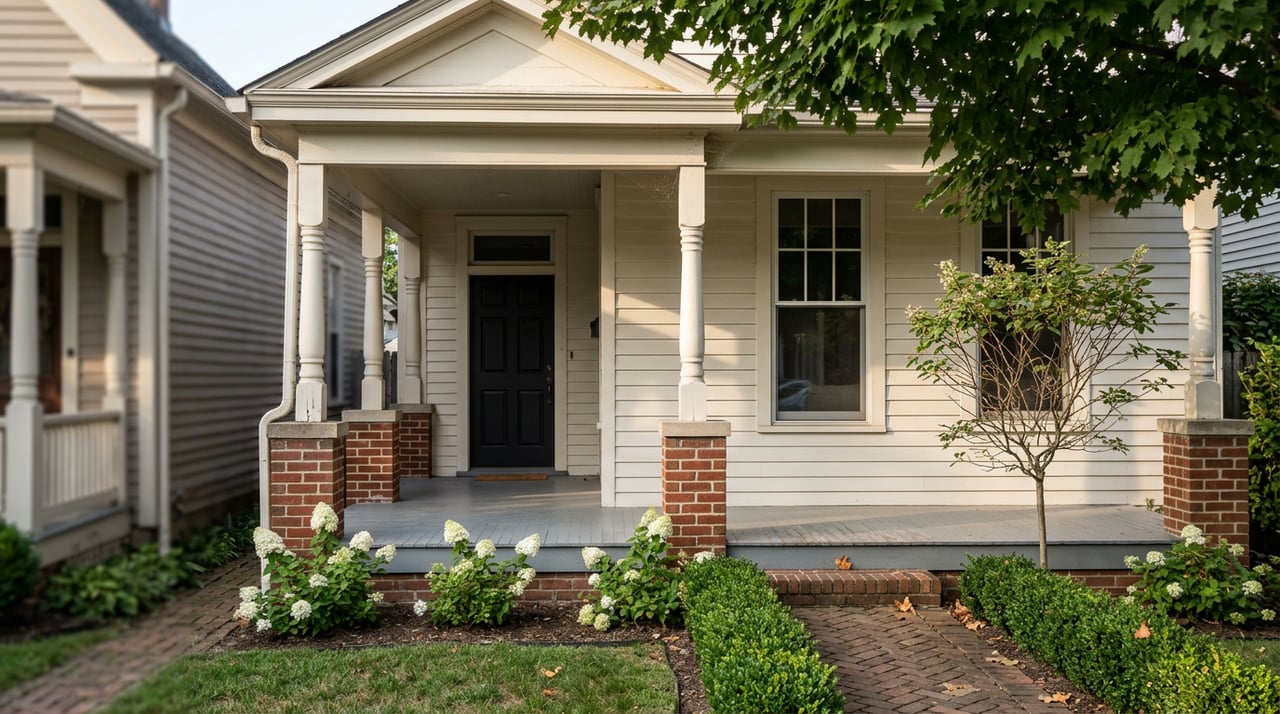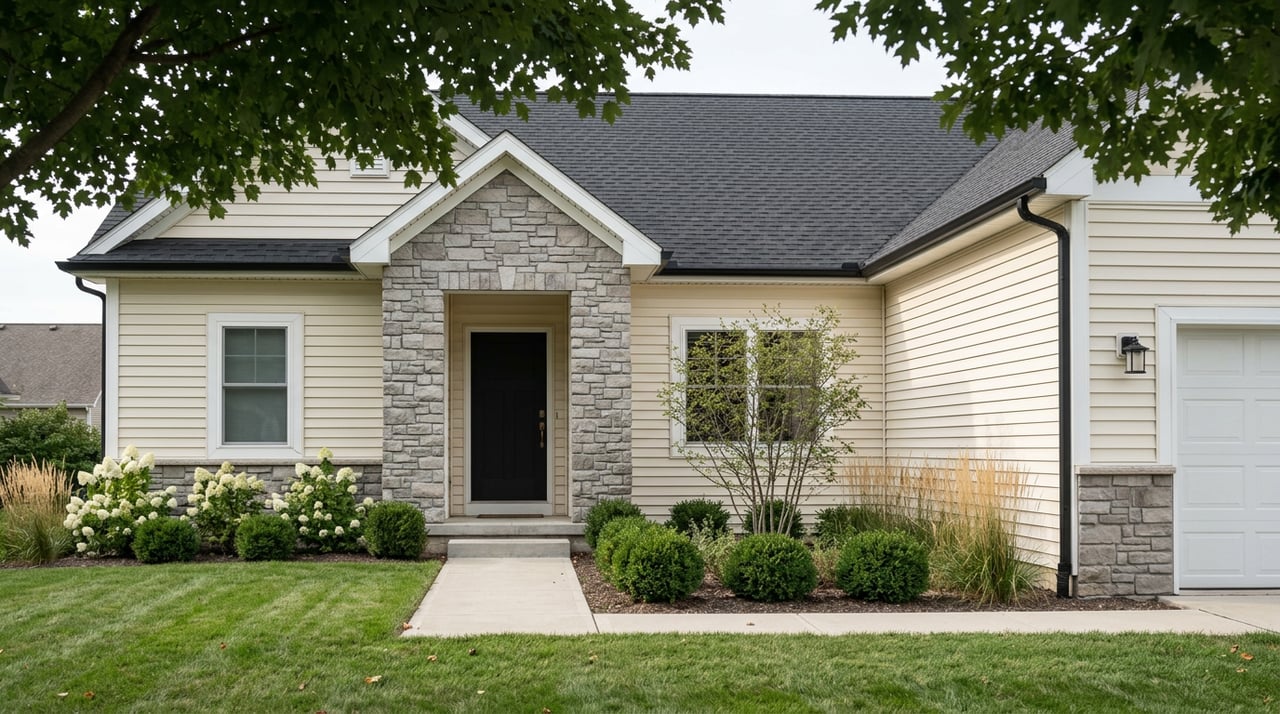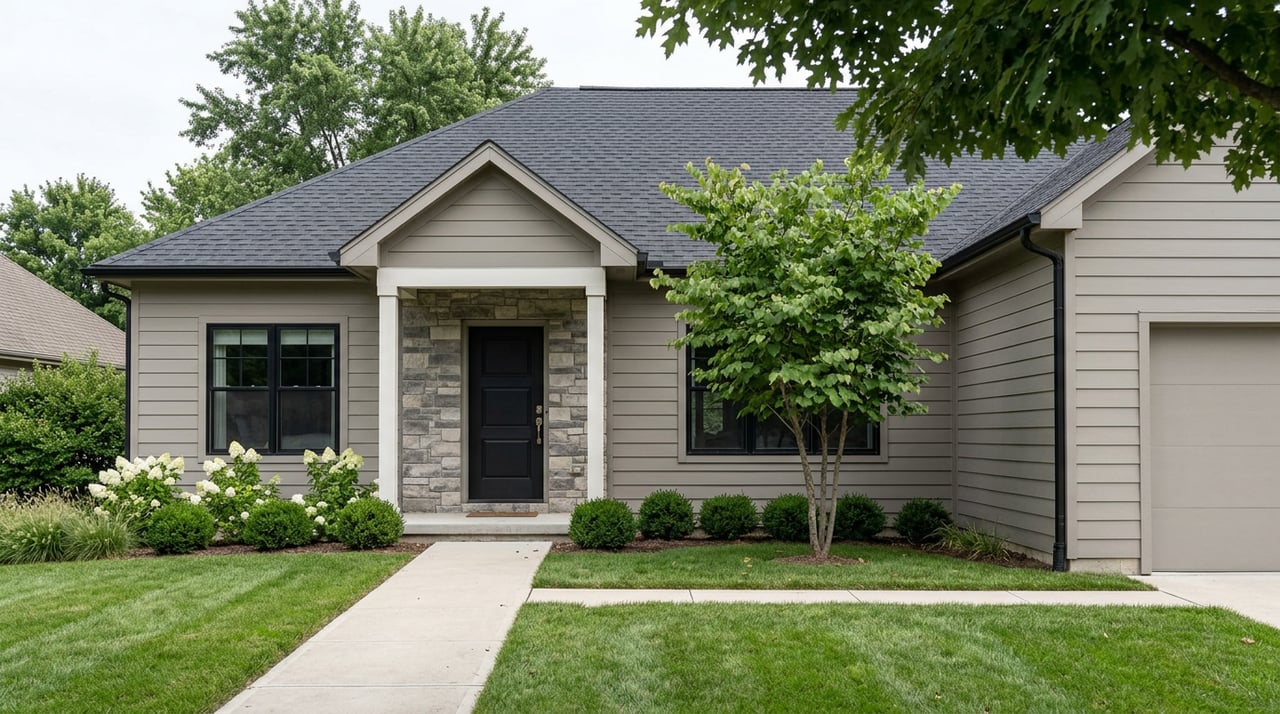
Picture touring a resale on Broadmoor Avenue this fall. The kitchen is updated, the yard backs up to mature trees, and the listing photos make no mention of the orange barrels forty feet from the front door. Your agent pulls up a project map before you even finish the walkthrough, because the answer to "will this affect me" depends entirely on which fifty feet of curb your parcel sits behind. That is the actual state of buying or selling along the M-37 corridor in Caledonia in August 2026, and it is a more interesting problem than "there's construction, expect some noise."
MDOT's rebuild of M-37, known locally as Broadmoor Avenue, is a $50 million, multi-year project that started with utility relocation and tree clearing this spring and is not expected to substantially wrap until mid-September 2027, according to a Fox17 report on the project timeline. That means anyone closing on a corridor property this year is buying into roughly another year of active work, not a project that's winding down. The useful question isn't whether the road is under construction. It's which of three very different situations your specific address falls into, because each one changes what happens at inspection, appraisal, and the closing table.
Three Situations, Not One Construction Zone
The corridor isn't uniformly disrupted. MDOT's own project scope splits it into distinct categories of impact, and each carries a different transaction consequence.
| Where you are | What's actually happening | What it means for you |
|---|---|---|
| Inside the right-of-way footprint | MDOT needs permanent or temporary easements from 56 parcels along the 2.7-mile study segment, with two parcels facing full acquisition | Title work should confirm whether any acquisition or easement is recorded against the property before you write an offer |
| Near the closed trail segment (92nd to 84th) | The existing nonmotorized path is being realigned and will be closed with no alternate route during construction | A walkable-trail selling point may be temporarily unusable, which affects how an appraiser and a buyer both experience the property today versus after 2027 |
| Elsewhere on the boulevard | The road itself is being widened to four lanes with new signals at 92nd, 84th, and 76th streets | Comparable sales may be harder to pin down while the corridor's traffic pattern is mid-change, and financing timelines can stretch as a result |
Each of those rows is documented directly by MDOT, and each one requires a different conversation depending on which parcel you're actually looking at.
The Timeline You're Buying Into
It helps to see the project in sequence rather than as one undifferentiated construction season:
- December 2025 — MDOT's target date to request contractor bids for the project.
- February 2026 — Utility relocation and tree clearing began, the first visible work on the ground.
- Spring 2026 through fall 2027 — MDOT's own project page lists this as the active construction window for the full 2.7-mile segment.
- Ongoing through 2026 — Traffic is maintained at one lane in each direction for most of the build, with MDOT noting some short-term full closures may still be necessary.
- Mid-September 2027 — The estimated substantial completion date, per Fox17's reporting on the project.
If you're comparing Caledonia to Cascade, Ada, or Rockford right now, this is the detail those neighborhoods don't have. You aren't just weighing a median price. You're weighing whether you're comfortable owning through a defined, dated construction window versus one that's already behind you.
Why the Right-of-Way Zone Is a Different Conversation at the Table
MDOT has been direct about the scope here: the preferred design requires right-of-way from 56 parcels along the corridor, and two of those may require acquiring the entire parcel rather than a partial easement. Temporary easements get returned to the owner once construction wraps. Permanent acquisitions do not, and property owners are compensated through standard state and federal procedures.
If you're selling a home that falls inside this footprint, that's a disclosure conversation, not an afterthought. If you're buying one, it's worth confirming with title work whether any acquisition has already been recorded, because a partial taking can affect setbacks, drainage, or future use in ways that a five-minute drive-by won't reveal. MDOT publishes the project area and study segment map publicly, and checking a specific parcel against it before writing an offer takes less time than a single showing.
The Trail Closure Nobody's Comps Reflect Yet
Caledonia's trail network is a genuine amenity, and MDOT's own environmental review names the properties in play: Caledonia Community Green Park, the nonmotorized path connecting to the Paul Henry-Thornapple Trail near Lakeside Park, and the Lepard Nature Preserve all sit within the project's area of potential effect. The existing trail segment between 92nd and 84th streets is being shifted east to make room for the widened road, and during that work it will be closed with no alternate route.
That matters for a very specific reason. A home marketed on trail access is being appraised and shown right now in a version of the neighborhood where that trail doesn't currently connect the way it will once construction ends. Appraisers lean on recent, comparable sales to support a value, and a corridor that's mid-transformation makes finding a truly similar comp harder than it looks on paper. Timothy Somers, a real estate appraiser and partner at the appraisal firm Davis M. Somers Company Inc. in Ann Arbor, has pointed out that even a traffic light within eyesight of a home can shape how buyers perceive a property, and this corridor is gaining several. The broader pattern holds here too. Real estate CEO Greg Hague puts it plainly: the real detractor on a busy road is often "the fear that buyers have that these homes will be harder to sell," a perception that can move both asking price and days on market.
None of that means a trail-adjacent or corridor-facing home is a bad buy. It means the current disruption and the eventual payoff are two different moments, and a buyer or seller who treats them as the same moment is negotiating from the wrong set of facts.
What This Means If You're Selling This Fall
Price to the condition and access buyers experience today, not to the boulevard that will exist in 2027. If your listing sits inside the mapped right-of-way zone, get ahead of it in your disclosures rather than letting a buyer's title search surface it as a surprise. If your home backs to the closed trail segment, be specific in your marketing about what's temporary and what's permanent, because a vague reference to "trail access" that a buyer discovers is currently unusable erodes trust faster than simply explaining the timeline up front. Staging and pricing strategy still do real work here. A well-presented home with a clear, honest account of the construction timeline tends to outperform one that hopes the buyer won't ask.
What This Means If You're Buying Right Now
Start with the map, not the listing photos. Confirm whether the specific parcel falls inside the 56-parcel right-of-way footprint before you get emotionally attached to a house. If it's near the 92nd-to-84th trail segment, understand that the amenity you're picturing is on pause, not gone. And recognize the flip side of all this friction: a corridor mid-construction is also a corridor where patient buyers can sometimes negotiate more room than they could once the finished four-lane boulevard and completed trail network are fully in place. Buying into disruption with clear eyes is a very different decision than buying into disruption you didn't know existed.
A Few Questions Worth Asking Directly
Does construction disqualify me from getting a mortgage on a corridor property? No. Lenders still finance homes along active construction corridors regularly. What can change is the comp search, since appraisers may need a wider radius or more time to document value support in a corridor that's actively changing.
When does the project actually finish? MDOT's estimate, reported by Fox17, is mid-September 2027. Signal installations at 92nd, 84th, and 76th streets happen in phases before that date, so different stretches of the corridor will feel more or less disruptive depending on where the crews are working in a given month.
Is the trail closure permanent? No. The segment between 92nd and 84th is being realigned, not eliminated, and MDOT's plans include a new multi-use path extending north from 84th Street once the roadway work is complete.
Caledonia is still one of the more accessible suburbs on the southeast side of the Grand Rapids metro, and that won't change once the construction dust settles. What changes between now and September 2027 is which specific parcels carry extra homework, and knowing the difference before you write an offer or set a list price is worth more than any headline number on a portal. If you're weighing a purchase or a listing anywhere along this corridor, Clark & Clark can walk the project map with you parcel by parcel before you commit to either side of the transaction.