Open a listing portal, type in Rockford, and you'll get three different prices for the same town inside of thirty seconds. One source puts the average home value at $461,550. Another puts the median estimated value at $475,219. A third puts the median home currently listed for sale at $510,000. None of these numbers is wrong. They're describing three different things, and if you're actually trying to buy in Rockford this year, the gap between them tells you more than any single figure on the page.
All three numbers live inside the same zip code, 49341, and that zip code is where the real story hides. Home values there range from roughly $51,000 to more than $2.3 million. That's not statistical noise. That's three genuinely different housing products sharing one address book.
Same Address Book, Three Different Housing Products
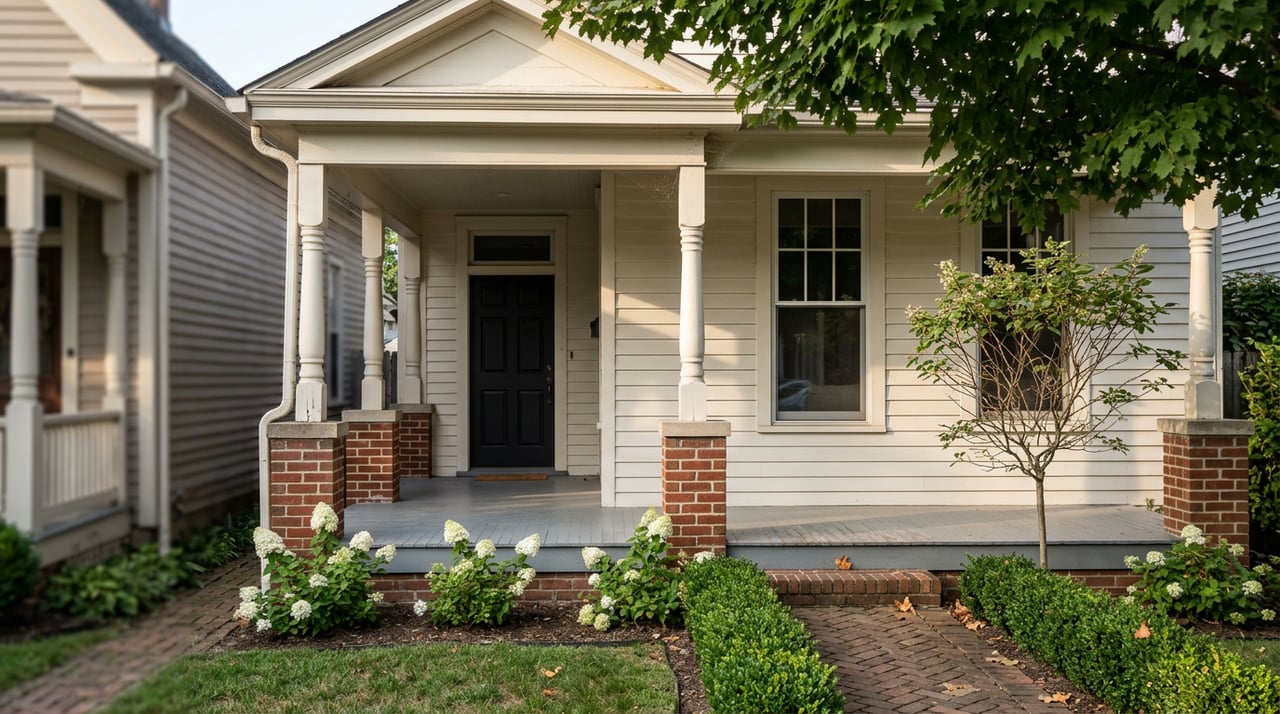
The first tier sits in and around downtown, close to the Rogue River, walkable to Main Street. This is condo living and older single-family stock, the kind of inventory you'll find in developments like Villas at Town Square, marketed on low-maintenance, one-owner living. Condos here run meaningfully cheaper per square foot than single-family homes across Rockford, roughly $33 a foot less on average, which anchors the low end of that zip-wide range.
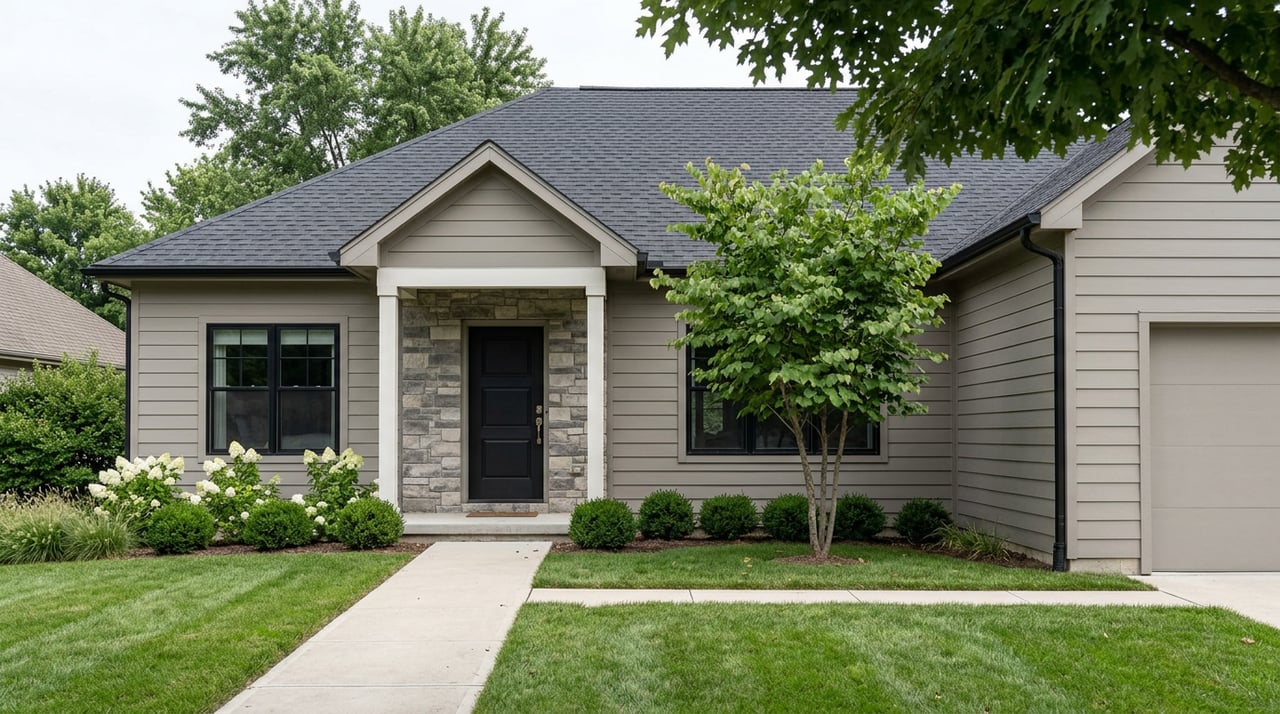
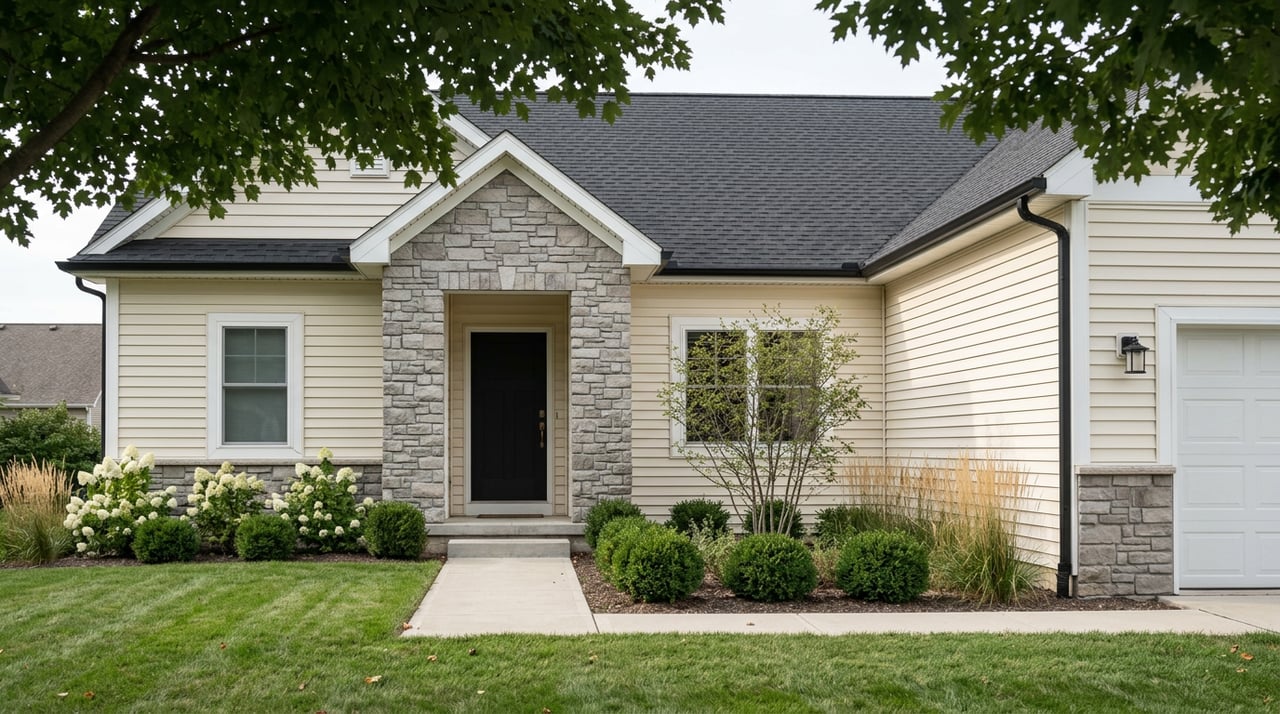
The second tier is the platted subdivision, the newer 3-to-5-bedroom construction going up in neighborhoods like Heritage Park, built by established local custom builders. This tier clusters closest to the numbers you actually see quoted as the Rockford average and median.
The third tier is acreage. Head out into Cannon Township or nearby Plainfield Township, still carrying a Rockford address and still zoned into Rockford Public Schools, and you're looking at 2-to-40-plus-acre parcels bordering places like Luton Park, Myers Lake, Bostwick Lake, and the village of Cannonsburg. This is where custom builders take a property from a wooded lot to a five-bedroom estate, and it's this tier that drags the top of the zip code's price range up toward $2.3 million.
| Tier | Where | What it looks like | What it does to the price range |
|---|---|---|---|
| In-town / downtown-adjacent | Walking distance of the Rogue River and Main Street | Condos, bungalows, older single-family homes | Anchors the low end |
| Platted subdivision | Neighborhoods like Heritage Park | Newer 3-5 bedroom construction | Sits near the reported average and median |
| Acreage / custom build | Cannon and Plainfield Townships, near Luton Park and Myers Lake | 2-to-40-plus-acre parcels, custom builders | Pulls the top toward $2 million-plus |
Why the Average and the Asking Price Don't Agree
Here's the mechanism worth understanding before you compare Rockford to anywhere else. An average home value describes every home that exists in the market, including the modest in-town condo that hasn't changed hands in a decade. A median list price describes only what's actively for sale right now, and right now that pool skews toward the subdivision and acreage tiers, because older, cheaper in-town homes simply turn over less often.
That's why the median asking price for a Rockford home reached $510,000 by July 2026, roughly $50,000 above the broader average value on the books. It isn't that Rockford got more expensive overnight. It's that the current for-sale mix is weighted toward the pricier half of the market. Buyers hunting the in-town condo tier are shopping a much smaller, cheaper slice of the same zip code than the headline number implies.
The affordability math built around that $510,000 figure assumes a 25 percent down payment and a monthly payment capped at 35 percent of income, which works out to a household income near $109,000 a year as of July 2026. That's a real number, but it describes a buyer shopping the subdivision or acreage tier. A buyer working the downtown condo tier is running a very different budget.
The Financing Line Nobody Draws on a Listing Photo
The three-tier split matters just as much once you get to the mortgage. Kent County's 2026 conforming loan limit is $832,750, which covers nearly every listing across all three Rockford tiers without triggering jumbo pricing. FHA's floor for the county sits at $541,287, putting most subdivision homes and a good share of acreage parcels inside FHA territory, while the entry-level condo tier usually doesn't need any special accommodation at all.
Michigan's MI Home Loan program caps at a sales price of $544,233 and pairs with the MSHDA MI 10K DPA, a zero-interest second lien of up to $10,000 that isn't repaid until you sell, refinance, or pay off the first mortgage. That program is squarely useful for a buyer working the in-town or entry-subdivision tier, less so for anyone shopping the acreage end.
There's one wrinkle that runs against intuition. USDA's zero-down rural financing doesn't reach the urban core of Grand Rapids, but it does reach the rural fringe of Kent County. That means a Cannon Township or Plainfield Township parcel carrying the same "Rockford" address as a downtown condo might actually clear USDA's eligibility map, while the walkable listing across town never will. It's worth checking a specific address before assuming the acreage option is automatically the harder buy financially.
What's Actually Holding Prices Up Here
None of this happens in a vacuum. Rockford sits 14 miles north of Grand Rapids on the Rogue River, and the same river that runs through downtown hosts the free Rogue River Blues concert series every Tuesday evening from June through August, plus Harvest Fest across three weekends each September and October. The Fred Meijer White Pine Trail State Park, a 92-mile corridor running from Grand Rapids to Cadillac, cuts directly through town.
A local market outlook published in January 2026 tied its 2026 forecast to exactly this mix, projecting a 14 percent increase in Rockford-area home sales for the year, driven by stabilizing mortgage rates, rising buyer confidence, and continued demand tied to downtown, trail, and river access. The same outlook expected home values to keep climbing only at roughly the pace of national inflation, not another sharp run-up.
Zoom out to the county and the premium becomes clearer. Rockford's average home value of $461,550 sits well above Kent County's broader median, which a metro-wide report published in August 2026 puts near $335,000 on an older county-wide read and closer to $359,048 on a fresher April 2026 cut. Either figure leaves Rockford running meaningfully ahead of the county as a whole. Kent County's population is forecast to grow 13 percent between 2025 and 2050 even as the state's overall population is projected to decline, and that long-term pull toward the region shows up early in a river town with a downtown, a trail, and a school district that reaches well past the city limits.
Decide Which Rockford You're Actually Shopping For
Before you compare Rockford to another West Michigan suburb using a single number, decide which of the three products you're actually pricing. Someone comparing a condo near downtown against a starter home in a neighboring town needs the in-town figure, not the zip-wide average. Someone comparing acreage in Cannon Township against a rural parcel elsewhere needs the top-tier figure, not the median list price on portal search results.
Mixing them is how a buyer either overpays for a downtown condo because "Rockford averages $461K," or underbids on a subdivision home because "Rockford's median is only $475K." The label on the listing is accurate. It just isn't specific enough to shop by on its own.
A Couple of Questions Worth Answering Directly
Is Rockford's housing market currently favoring buyers or sellers? Pricing still favors sellers, with well-positioned listings going to pending in around six days as of late May 2026. But selection is the tighter constraint. Because the market splits into three genuinely different products, a buyer's real comparable pool is smaller than the total inventory count suggests, which matters more day to day than the pending-sale speed.
Does a "Rockford, Michigan" listing always mean inside the city itself? No. A number of current Rockford-address listings sit in Cannon Township or Plainfield Township, outside the roughly 6,264-person city proper, closer to Myers Lake, Bostwick Lake, or Cannonsburg than to Main Street. The address and the school district both extend well past the city line.
If you're comparing Rockford to Ada, Rockford to Cascade, or trying to figure out which of these three tiers actually fits your budget and your list, that's exactly the kind of conversation worth having before you start touring homes rather than after. Reach out to Clark & Clark and we'll walk through which Rockford makes sense for what you're trying to do.