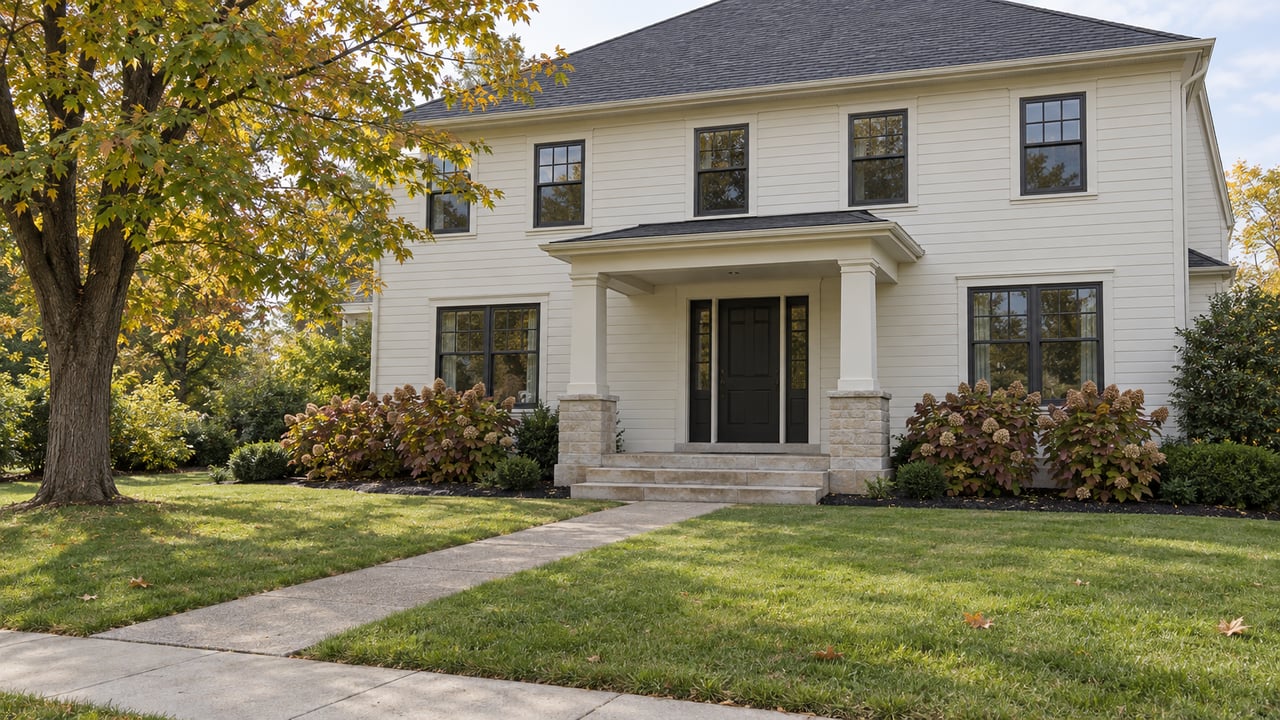
"My mortgage company raised my house payment because of my taxes. Why did the taxes go up so much?"
The City of East Grand Rapids gets this question often enough to answer it on its own assessing FAQ page. The city's answer is plain. It "typically" happens about a year after someone buys a house. The lender set the first escrow payment from "the last known taxes." After the sale, the home's taxable value "was uncapped for the next tax year," and the bill was then figured on a higher value.
So the tax number on an East Grand Rapids listing is accurate, but it belongs to the seller. It tells you how long the current owner has held the home and how much values have climbed since then. It doesn't tell you what your own bill will be once the house is in your name. In a city that charges one of the higher millage rates in Kent County, that difference is big enough to plan for before you write an offer.
The Number Is Frozen in the Seller's Year of Purchase
Michigan taxes homes on taxable value, not on market value. Grand Rapids' assessor describes the two numbers on every parcel. Assessed value is set at 50% of true cash value. Taxable value is the lower of the assessed value or a "capped" value. East Grand Rapids explains that since Proposal A took effect in 1995, the capped value can rise each year by no more than inflation or 5%, whichever is less, until ownership changes. For 2026, the State Tax Commission set that inflation multiplier at 1.027, which works out to 2.7%.
When values rise faster than that cap, a long-time owner's taxable value falls further behind the home's state equalized value, or SEV, every year. Then the house sells. The Michigan Department of Treasury says a transfer of ownership generally uncaps taxable value in the calendar year after the transfer, though state law lists some transfers that don't count. East Grand Rapids' assessment-notice guide puts it more directly: taxable value and SEV are equal in the year after a transfer.
Your price doesn't become your assessment. The city's assessing FAQ cites MCL 211.27(6), which says the purchase price "is not the presumptive true cash value" of the property. The assessor has to value a sold home the same way it values every unsold home in its class. The reset is to the assessor's estimate, which is meant to come close to half of market value.
How Far Behind the Typical Home Has Fallen
The size of the jump depends on how wide the gap has grown, and public data shows it is wide. Kent County's 2026 Strategic Plan reports countywide SEV of $51.8 billion against taxable value of $35.8 billion, so taxable value is 69.1% of SEV. Turned around, that means a property sitting at the county average would see its taxable value rise by roughly 45% once it uncaps to SEV. That's an average across the whole county. A home owned since the 1990s will usually sit much further below SEV, and one bought three years ago will sit closer.
The gap is still growing. In its 2026 Assessment Roll Report, the City of Grand Rapids says a strong real estate market pushed its SEV up for the twelfth straight year. It adds that "as property values continue to increase this gap continues to widen." East Grand Rapids sits right next door. The State Tax Commission lists its 2026 ad valorem SEV at $1,657,519,800.
Here is how that plays out for one house. These are hypothetical round numbers, not a figure for any real property:
- A home's assessor-estimated market value is $600,000, so its SEV is about $300,000.
- The seller's taxable value sits at the county average of 69.1% of SEV, or $207,300.
- At East Grand Rapids' 2026 summer homestead rate of 44.011 mills, the seller's summer bill is about $9,123.
- The year after closing, taxable value uncaps to $300,000, and the same summer rate produces about $13,203.
That's roughly $4,080 more on the summer bill alone, on the same house, with no change in the tax rate. The winter bill comes on top of that.
Which Rate Your Reset Value Gets Multiplied By
East Grand Rapids publishes its levies line by line. Its millage sheet, dated June 25, 2026, lists fourteen summer levies. A selection of the largest is below, with the sheet's own totals. The homestead total leaves out the 18-mill school operating levy, and the non-homestead total includes it:
| Selected summer levies | 2024 | 2025 | 2026 |
|---|---|---|---|
| EGR School Debt | 9.95 | 9.95 | 9.95 |
| EGR School Operating | 18 | 18 | 18 |
| State Education Tax | 6.00 | 6.00 | 6.00 |
| Kent ISD | 5.402 | 5.3515 | 5.2906 |
| City of EGR Operating | 11.3508 | 11.1419 | 10.8934 |
| County Operating | 4.0987 | 4.0605 | 4.0142 |
| Summer total, all levies, homestead | 44.507 | 44.473 | 44.011 |
| Summer total, all levies, non-homestead | 62.507 | 62.473 | 62.011 |
The 18-mill gap between those two totals is the Principal Residence Exemption. The Michigan Department of Treasury says the exemption covers a qualified principal residence from local school operating taxes, up to 18 mills. It is separate from the income-tax Homestead Property Tax Credit. School News Network notes that rentals and second homes may owe the 18-mill operating levy. That matters to anyone weighing an East Grand Rapids home as an investment property.
Several rates fell slightly from 2025 to 2026, and the homestead summer total dropped from 44.473 to 44.011 mills. A seller can truthfully say the city's rates went down. For a buyer, a rate that's half a mill lower applied to a value that just jumped by tens of thousands of dollars still means a bigger bill.
The comparison with Grand Rapids works the same way. Treasury's 2025 total rates report puts East Grand Rapids at 47.4995 mills with the exemption for full-year 2025, summer and winter combined. Inside Grand Rapids city limits, homestead totals ranged from 33.1249 mills in the Grand Rapids City Schools area to 36.3132 in the Forest Hills Public Schools area. On the same $300,000 SEV, that 14-mill spread at the low end comes to about $4,300 a year. Because Grand Rapids covers seven school districts, the street address matters as much as the city name.
November 3 Adds Levies to the Reset Value
On Tuesday, November 3, East Grand Rapids voters will decide a bond question. It asks whether the city may borrow up to $9 million, repaid over no more than 20 years. The money would go toward a public parking facility on Bagley near the East Grand Rapids Public Schools parking lot, traffic signals at Lake and Bagley/San Lu Rae, and pedestrian and micromobility safety work. The ballot estimates 0.5922 mills in the first year and an average of 0.4925 mills over the life of the bonds. FOX 17 reported that the plan is a 240-space, three-story deck next to East Grand Rapids High School, meant to replace parking lost during the high school renovation. The city and the school district would split the cost, and total debt service would come to about $13.2 million with interest. The station also reported opposition from nearby residents and a divided city commission vote to put the question on the ballot.
The same ballot asks Kent County voters to set a corrections and detention levy of 0.98 mills for 2026 through 2045. That includes an increase of 0.2468 mills over the current rate. MLive describes it as a 34% increase, from 0.73 to 0.98 mills. A county zoo-and-museum millage renewal at 0.4086 mills is also on the ballot.
Every one of these is charged per $1,000 of taxable value, so a new owner pays more of any new levy than a long-time neighbor in a similar house. In the hypothetical above, the bond's first-year rate costs the capped seller about $123 on $207,300 of taxable value. The buyer, after uncapping, pays about $178 on $300,000. The city's FAQ names this second trigger too. A millage election can raise a bill even when nobody has bought anything.
Running the Buyer's Number Before the Offer
The state and both cities offer tools that start from the right value. The Treasury property tax estimator tells future owners to enter SEV, not the current owner's taxable value. It also says it is still using 2025 billed rates, which include the 1% administration fee, and that 2026 rates will be posted in August 2027. Grand Rapids' property tax estimator asks for assessed value to estimate a future owner's taxes and includes a field for the exemption percentage. East Grand Rapids keeps a Tax Bill Estimator & Millage Rates page alongside the levy sheet above.
For any specific home, the inputs are the SEV shown on the assessment notice, the homestead or non-homestead total for that address, and whatever voters approve on November 3. Ask your lender how they plan to set escrow. If they base it on the seller's last bill, the shortfall shows up about a year later.
Quick Answers
Does the tax jump happen at closing? No. The city says taxable value uncaps "for the next tax year," which is why escrow changes tend to show up about a year after purchase.
Will my taxable value equal my purchase price divided by two? Not necessarily. The assessor values sold and unsold homes by the same method, and state law says sale price is not the presumptive true cash value.
Does the exemption cover all school taxes? No. East Grand Rapids notes that eligible homeowners can be exempt from 18 mills of school operating taxes but still pay school debt, building funds and the State Education Tax.
This post is general information about how Michigan property taxes work, not legal, tax or financial advice. Please confirm the details for your own property and situation with the assessor, your lender or a tax professional.
When you're comparing an East Grand Rapids home with one across the city line, the number that matters is the one you'll pay, not the seller's bill. Clark & Clark can help you work out the post-uncapping estimate for a specific address and bring it to your lender before you make an offer. Contact Us to start with the house you're watching.